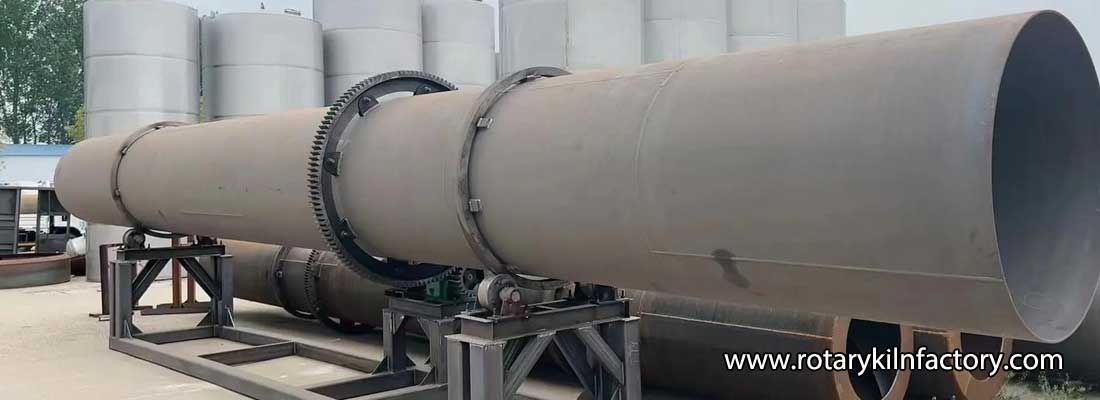

As the modern process accelerates, the lime industry is also in rapid development and rotary kiln’s application in the lime industry has widened up. AGICO is a popular and professional manufacturer in producing lime rotary kiln. After continuous accumulation and innovation, AGICO has huge advantages in production technologies.

This essay is to analyze critical factors in lime rotary kiln operation by AGICO specialist. From the view on lime rotary kiln technical craft, lime production is a process with complicate working conditions, plenty controlling projects, changeable parameters. The calcination and cooling of lime are usually under high temperature, plenty of dust and fluctuate conditions. So, with complicated physical and chemical reactions, the controlling process will have many difficulties.
Controlled Materials And Environment

kiln line 
kiln-shell 
lime-rotary-kiln-plant
Controlled materials and environment are very complicated, the calcinating of lime as a mass production process. Per hour average material quantity can reach hundreds of tons; Per minute ventilation quantity can be more than 10 thousand square meters. So, every material in a rotary kiln is not calcinated alone, they are processing complicated physical and chemical reactions while multiple materials doing the motion. So, in calcination and cooling, there must be many uncertainties. During the firing process of the lime rotary kiln clinker system, the materials undergo physical and chemical reactions in a closed kiln up to tens of meters at a high temperature of 1100 degrees. The materials of the lime rotary kiln are preheated by a five-stage preheater before entering the kiln. Decomposition with the decomposition furnace, coupled with the coal injection and cooling system of the kiln head of the lime rotary kiln constitutes a very complicated lime firing system.
Controlled Parameters
The lime rotary kiln has a large number of control parameters and strong coupling characteristics. The key to its production is to ensure the stability of the thermal system, and to constantly monitor and control parameters such as temperature and pressure. Sometimes, hundreds of parameters need to be controlled. There are many, and these many parameters often affect each other, and therefore they need to be analyzed accurately.
Wear-resisting Of Lime Rotary Kiln
- The moisture content of the material before entering the mill. Generally speaking, when entering the tube mill without drying, the uniform moisture content of the calcined raw material in the lime rotary kiln is preferably less than 1%. If the moisture content exceeds this value, the abrasiveness of the calcined raw material in the lime rotary kiln will be worse. When entering the tube mill and vertical mill with drying, this value can be relaxed to a certain extent, especially for vertical mill, it needs to increase to about 8%.
- We all know that the abrasiveness of limestone depends on the geological origin of the limestone, the layout of the mineral deposits, and other factors. The greater the free silica content in the limestone, the worse the abrasiveness.
- Aluminum, silicon, and iron are mixed into the calcining raw materials of the lime rotary kiln to check the raw material share and the degree of easy grinding. For example, slag, river sand, and alumina are all awkwardly ground materials. If their share is higher, the abrasiveness is worse. More importantly, the greater the difference between the grindability of these ingredients and limestone, the segregation effect that occurs in the subsequent processes will make the calcined material composition of the lime rotary kiln uneven, and will adversely affect the lime rotary kiln firing process.