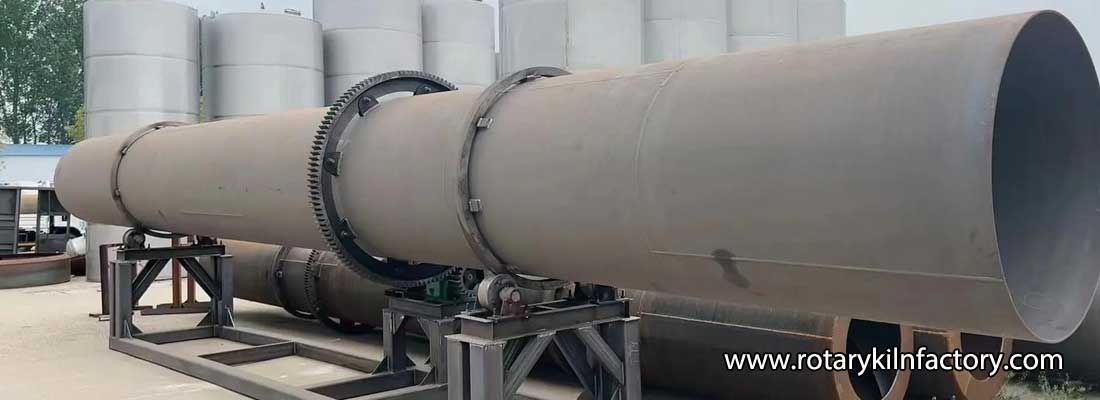

In modern industrial production, the rotary dryer plays a crucial role as one of the key equipment. Sand dryer, gypsum dryer, bentonite dryer, coal dryer, sludge dryer, sawdust dryer, cow manure dryer, etc. These dryers are indispensable in the production chain, whether in the mining, agriculture, chemical, or food processing industries. Effective drying can not only improve product quality but also significantly increase production efficiency and save energy. Therefore, choosing suitable drying equipment is crucial for the operation and development of enterprises.
Among the various types of industrial dryers, direct rotary dryers(direct-fired rotary dryers) and indirect rotary dryers(indirect-fired rotary dryers) are two common and important types. Direct rotary dryers use the heat generated by combustion to directly contact the material for fast and efficient drying. Indirect rotary dryers transfer heat through an intermediate medium so that the heat source does not come into direct contact with the material, thereby achieving a gentle and uniform drying process. Direct rotary dryers and indirect rotary dryers each have their own unique working principles and application scenarios, and companies need to consider a variety of factors when choosing.
From the perspective of production efficiency and environmental protection, direct rotary dryers and indirect rotary dryers each have their own advantages and disadvantages. We will compare and analyze their equipment characteristics and performance, hoping to provide a valuable reference for enterprises to choose drying equipment.
Direct Rotary Dryer
How does a direct rotary dryer work?

The basic working principle of a direct rotary dryer is very intuitive and efficient. At its core, it is based on burning fuel (such as natural gas, coal, or fuel oil) to generate high-temperature gases, which directly contact the material to be dried, thereby evaporating the moisture in the material. Specifically, the fuel is burned in the combustion chamber, and the generated hot gases are directed to the area in direct contact with the material through the hot air flow system in the dryer. In this process, heat is directly transferred to the material by convection and conduction, causing it to quickly heat up and dehydrate.
This direct contact heat transfer method enables the direct-fired rotary dryer to effectively dry the material in a shorter time. Since the hot air flow is in direct contact with the material, the heat transfer efficiency is very high, which can quickly increase the temperature of the material and accelerate the evaporation of water. This drying method is usually used for materials that are not sensitive to temperature changes, such as ore, sand, coal, etc.
| Model | Inclination angle(°) | Rotation speed(r/min) | Capacity(t/h) | Inlet temperature(℃) | Motor power(kw) |
|---|---|---|---|---|---|
| Ф0.8*8m | 2-5 | 4.7 | 1-1.5 | <700 | 5.5 |
| Ф1*10m | 2-5 | 4.7 | 1.5-2 | <700 | 7.5 |
| Ф1.2*12m | 2-5 | 4.7 | 2-2.5 | <700 | 11 |
| Ф1.5*12m | 2-5 | 5 | 4-6 | <700 | 15 |
| Ф1.5*15m | 2-5 | 5 | 5-7 | <700 | 15 |
| Ф1.8*15m | 2-5 | 5 | 7-10 | <700 | 18.5 |
| Ф2*20m | 2-5 | 3.9 | 8-14 | <700 | 22 |
| Ф2.2*22m | 2-5 | 3.2 | 12-16 | <700 | 37 |
Efficiency analysis

Direct-heating dryers have significant advantages in efficiency, which are mainly reflected in the following aspects:
First of all, since the hot air flow is in direct contact with the material, the loss during heat transfer is small, making the thermal efficiency very high. This efficient heat transfer method means that the material can be quickly heated to the required temperature in a short period, thereby significantly shortening the drying time and improving production efficiency.
Secondly, direct-heating dryers are particularly suitable for processing high-humidity materials. For materials with high humidity, such as mud, ore, and agricultural products, direct-heating dryers can quickly evaporate the moisture in them to prevent the materials from deteriorating due to a long-term high-humidity environment. In addition, this efficient drying method can also prevent the material from losing its original characteristics due to overheating during the drying process, maintaining the quality and performance of the material.
Furthermore, the structure of the direct-heating dryer is relatively simple and easy to operate and maintain. Its basic structure includes several main parts such as the combustion chamber, hot air flow system, and drying cylinder. The connection and cooperation between the parts are relatively direct, which also makes the equipment have a low failure rate and relatively small maintenance costs.
Environmental issues

Although direct-fired dryers have obvious advantages in terms of efficiency, they face certain challenges in terms of environmental protection. This mainly manifested in the following aspects:
First, the exhaust gas produced during direct-fired has complex components and may contain carbon monoxide (CO), carbon dioxide (CO2), nitrogen oxides (NOx) and other volatile organic compounds (VOCs). If the emission of these gases is not controlled, it will pollute the environment, affect air quality, and even have adverse effects on human health.
Secondly, the high-temperature flue gas produced by direct fire may also carry particulate matter, which makes it easy to form smoke during the emission process, further aggravating environmental pollution. Therefore, during the use of direct-fired dryers, it is necessary to equip them with an effective emission treatment system to control and reduce the emission of harmful substances.
To deal with these environmental issues, direct rotary dryers usually need to be equipped with the following emission treatment systems:
1. Dust removal equipment: such as bag filters or electrostatic precipitators, which are used to capture and remove particulate matter in flue gas to prevent it from being discharged into the atmosphere.
2. Desulfurization devices: such as wet desulfurization, dry desulfurization spray drying desulfurization, etc., are used to remove sulfur dioxide (SO2) in flue gas and reduce the formation of acid rain.
3. Denitrification devices: such as selective catalytic reduction (SCR) or selective non-catalytic reduction (SNCR) technology, which are used to reduce nitrogen oxide emissions and control NOx concentrations in the atmosphere.
4. Exhaust gas treatment systems: such as activated carbon adsorption devices or combustion oxidation devices, which are used to remove volatile organic compounds (VOCs) and other harmful gases to ensure that the exhaust gas meets environmental standards.
In general, although direct rotary dryers have unparalleled advantages in efficiency, they require extra effort and costs in terms of environmental protection. By equipping it with a complete emission treatment system and optimizing the combustion process, its impact on the environment can be effectively reduced, achieving a balance between high efficiency and environmental protection.
Want More Details?
Would you like to learn more about the AGICO direct rotary dryer? Click the button to leave a message for our engineer now!
Indirect Rotary Dryer
How does an indirect rotary dryer work?

The basic working principle of the indirect rotary dryer is significantly different from that of the direct rotary dryer. Its core is that there is no direct contact between the heat source and the material, but heat is transferred through an intermediate heat transfer medium. This indirect heating method ensures that the heat source and material remain separated throughout the drying process, helping to achieve more uniform and fine temperature control.
Specifically, indirect rotary dryers usually contain the following main components: burner, heat exchanger, heat transfer medium and drying cylinder. The heat generated by the burner is first transferred to the heat exchanger, and the heat transfer medium (such as thermal oil, steam, or air) in the heat exchanger absorbs the heat and heats up. Subsequently, the heat transfer medium transfers the absorbed heat to the materials in the drying barrel, causing the temperature of the materials to rise and the water to evaporate, thereby achieving the purpose of drying.
This working principle ensures that harmful substances generated by the heat source will not directly contact the material, avoiding possible contamination and chemical reactions. The selection and management of heat transfer media is crucial in the operation of indirect combustion dryers, both to ensure efficient heat transfer and to ensure the safety and stability of the system.
Efficiency analysis

In terms of efficiency, the method of heat transfer in indirect heating dryers presents both advantages and challenges. Its efficiency analysis can be carried out from the following aspects:
First, the heat transfer efficiency of an indirect heating dryer depends largely on the performance of the heat transfer medium and the design of the heat exchanger. Efficient heat transfer media and optimized heat exchanger design can significantly improve heat transfer efficiency and reduce heat loss. However, compared with direct indirect heating dryers, the heat transfer process of indirect combustion dryers is more complicated and there is an additional intermediate link, resulting in a slightly lower overall thermal efficiency. Therefore, when designing and selecting an indirect heating dryer, special attention must be paid to the heat capacity and thermal conductivity of the heat transfer medium as well as the heat transfer area and material of the heat exchanger.
Secondly, indirect heating dryers are particularly suitable for handling flammable and volatile materials. Such materials are prone to chemical reactions or spontaneous combustion at high temperatures, so their temperature needs to be strictly controlled. Through fine temperature control and indirect heating, indirect heating dryers can effectively prevent overheating and unsafe reactions of materials, ensuring the safety and stability of the drying process. This advantage makes indirect combustion dryers widely used in temperature-sensitive industries such as the chemical industry and food processing.
Furthermore, the maintenance and operation of indirect heating dryers are relatively complicated, and regular inspection and maintenance of heat transfer media and heat exchangers are required to ensure the normal operation of the system. Nevertheless, its safety and adaptability in handling specific materials make it an irreplaceable advantage in specific application scenarios.
Environmental advantages

Indirect-fired dryers have significant advantages in environmental protection, which are mainly reflected in the following aspects:
First of all, the indirect-fired dryer transfers heat indirectly through the heat transfer medium, avoiding the harmful gases generated by combustion from directly contacting the material, thereby reducing the emission of harmful gases. This indirect heating method can effectively control the generation and emission of pollutants, helping to reduce environmental pollution and harm to human health.
Secondly, indirect-fired dryers can better control emissions. Since the flue gas and materials generated by combustion are separated, the composition of the emitted flue gas is relatively simple and easy to handle. By equipping with advanced emission treatment systems, such as dust collectors, desulfurization and denitrification equipment, particulate matter, sulfur dioxide and nitrogen oxides in the flue gas can be effectively removed to ensure that the emissions meet environmental standards. In addition, the heat transfer medium itself can also be recycled and regenerated, thereby further reducing resource consumption and emissions.
Furthermore, the indirect-fired dryer can better maintain the original properties and quality of the material during the processing process, avoiding material deterioration or harmful by-products caused by direct contact with high temperatures. This not only helps to improve product quality and market competitiveness but also reduces the difficulty of subsequent processing and cleaning.
The environmental advantages of indirect rotary dryers are also reflected in their ability to use a variety of clean energy and environmentally friendly fuels, such as natural gas, biomass fuels, etc., which further reduces the emission of greenhouse gases and pollutants. By adopting clean energy and optimizing the combustion process, higher energy efficiency and lower environmental impact can be achieved.
In general, indirect rotary dryers have obvious advantages in environmental protection, can effectively reduce harmful gas emissions and control emissions, and provide strong support for enterprises to achieve green production and sustainable development. Although it faces certain challenges in heat transfer efficiency, selecting efficient heat transfer media and optimizing heat exchanger design can improve overall thermal efficiency while ensuring environmental performance.
To sum up, direct rotary dryers and indirect rotary dryers each have their advantages and disadvantages in terms of efficiency and environmental protection. Direct rotary dryers perform well when handling high-moisture materials due to their efficient heat transfer methods and rapid drying capabilities. However, the harmful gases produced by its combustion process require complex emission treatment systems to reduce the impact on the environment. On the contrary, although the indirect rotary dryer is slightly inferior in heat transfer efficiency, its indirect heating method significantly reduces the emission of harmful gases, is more suitable for processing flammable and volatile materials, and has obvious environmental protection advantages.
When enterprises choose drying equipment, they should comprehensively consider their own production needs and environmental protection requirements. If you need to handle high-humidity materials and have high drying speed requirements, a direct rotary dryer may be more suitable. For production environments that require strict temperature control and emission reduction, indirect rotary dryers can better meet the needs.