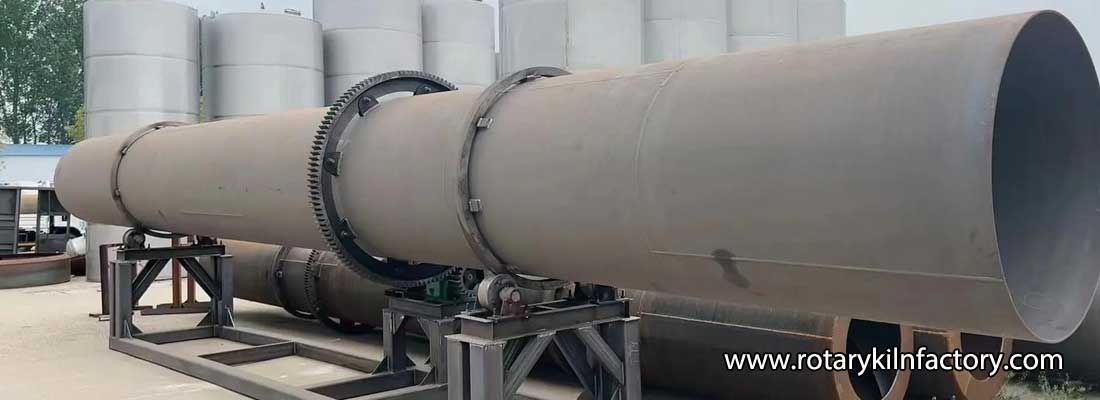

Rotary kiln is widely used in cement, construction and metallurgy sectors. Rotary kiln is an important main engine sector. In the beginning, it applied in the cement sector, then gradually evolve in other industries. Rotary kiln has so many different types. Today, we will teach you how to classify different types of the kiln.
Classified By Materials

cement-kiln 
metallurgy-kiln
Rotary kiln can be classified into cement kiln, metallurgy kiln, and lime rotary kiln.
Cement Kiln
Cement kiln ‘s rotating slows down when it is under high temperature. Maintenance of rotary kiln’s attachment and the ability of thermo technical controlling influences running rotary kiln’s security and efficiency. The key point of maintaining transmission gear is devices’ lubrication, running state, dynamic detection and accuracy of mesh between big gear and small gear. The accuracy of installation decides whether rotary kiln can running security and reliable.
Metallurgy Kiln
Metallurgy kiln has a wide coverage. It has a lot of different kilns like rotary kiln for magnesium metal, rotary kiln for magnesium oxide, bauxite rotary kiln, rotary kiln for carbon, rotary kiln for alumina, sponge iron kiln, activated carbon rotary kiln, gypsum rotary kiln, indirect-fired rotary kiln and rotary kiln for limonite.
Lime Rotary Kiln
Lime rotary kiln is in accordance with lime stone’s calcinating character. Using main equipments on lime rotary kiln line. Lime rotary kiln has the characters of high usage rate of materials, fully calcinating, evenness quality, good quality, huge capacity, high running rate, energy conservation and environment protection, easy to handle and complete machine long life. It is also in accordance with the industry policy of environmental protection, energy-saving and reducing energy consumption, which is quite suitable for calcinating limestone in metallurgy, chemical industry, and building materials industry.
Classified By Shape

variable-diameter-rotary-kiln 
diameter-rotary-kiln
Variable Diameter Rotary Kiln
Variable diameter rotary kiln is a kind of kiln that has changing diameters from kiln tail to kiln head, whose changing range is about 30cm. It has more merits than diameter rotary kiln such as energy-saving and high yield. But at the same time, it has high difficulty and is harder to process, which requires strict equipment.
Diameter Rotary Kiln
Diameter rotary kiln is a fixed diameter kiln from kiln tail to kiln head. It is the most common kiln type. Diameter rotary kiln invented by German Dietz in 1883. After a hundred years’ revolution, rotary kiln has become a general equipment. It has better efficiency, higher yield and simple to process but only consume more energy than variable diameter rotary kiln.
Classified By Statement

rotary kiln 
shaft-kiln
Rotary Kiln
It is cylinder equipment that is always used in mechanical, physical or chemical treatment of solid materials and other sectors. It combined with different parts. The main structure contains kiln head, kiln body, kiln tail, support frame, preheating tower, cooler and conveyor.
Shaft Kiln
Shaft kiln Obviously is a shaft shape kiln. Nowadays shaft kiln means highly automatic modern shaft kiln, which has characters of environmentally friendly energy-saving and automation. Own to its application of modern technology, it can fully use cheap energy and can turn pollution air into treasure.
Classified By Heating Mode

inner-heating-mode 
outside-kiln-heating-mode
According to the different heating mode, it can be classified into the inner heating mode and outside kiln heating mode.