
Why do we need to do the sand drying?
Sand typically refers to an aggregate of small mineral or rock fragments, primarily composed of minerals such as quartz and feldspar. These particles range in size from 0.0625 millimeters (fine sand) to 2 millimeters (coarse sand). Sand can form under the action of water, wind, or ice and is commonly found in geological environments such as rivers, beaches, deserts, lakes, and elsewhere. It is one of the most abundant geological materials on Earth’s surface and is widely used in construction, concrete manufacturing, glass production, filtration materials, and other applications.


Sand sourced from water bodies, such as river sand, sea sand, and lake sand, typically contains a high moisture content. Before being used in industrial or construction applications, it needs to undergo sand drying. Most industrial sand drying processes are conducted using sand drying equipment.
Sand drying equipment is designed to remove moisture from wet sand or sandy materials. Its primary function is to evaporate or vaporize the moisture in the sand using hot air or other heat sources, thereby achieving a certain degree of dryness in the sand. This equipment is commonly used in fields such as construction material production, industrial manufacturing, and mining to ensure the quality and stability of sand during production and processing.
How to dry sand? What are the steps involved in drying sand in sand drying equipment to obtain dried sand suitable for industrial production? Let’s explore together.
How to Dry Sand?

When it comes to sand drying, we have to mention sand drying production lines. Drying sand involves not just using a single sand dryer, but requires many auxiliary devices to complete the sand drying process. The main equipment in a sand drying line includes belt conveyors, mixers, wet sand storage bins, furnaces, fans, temperature control systems, drive units, sand dryers, dust collectors, dry sand storage bins, and more.
Belt conveyor
The wet sand material with a certain moisture content is transported to the sand drying production line to prepare for the drying operation. The first equipment in the drying operation is the belt conveyor. The belt conveyor transports the wet sand to the next stage and ensures even distribution of the wet sand.

Function: The belt conveyor is a crucial equipment connecting various production stages. It ensures the continuous and stable transportation of sand by evenly distributing it on the conveyor surface, thereby enhancing the production efficiency and operational speed of the entire production line. Additionally, it saves labor resources and increases automation in production.
Mixer
The belt conveyor transports wet sand to the mixer, where large clumps of wet sand are broken up. The processed wet sand is then conveyed to the next stage by another belt conveyor.
Function: The mixer breaks up large clumps of wet sand that have stuck together due to high humidity, ensuring that the sand does not clump together and facilitating the subsequent drying operation.
Belt conveyor
The dispersed wet sand is transported to the next stage again by the belt conveyor.
Wet sand storage bin
The belt conveyor transports wet sand to the wet sand storage bin, where the wet sand is stored temporarily while being fed into the vibratory feeder at a controlled rate.
Function: The wet sand storage bin serves as a temporary storage device for wet sand, ensuring that there is a place for the upstream sand to go and allowing downstream sand to be uniformly transported at a consistent rate.
Vibratory feeder
The sand is vibrated by the vibratory feeder to break it down into smaller particle clusters, further dispersing larger sand chunks. It is then scattered onto the next belt conveyor.

Function: To disperse and transport materials.
Belt conveyor
This belt conveyor directly transports the material to the feed inlet of the dryer this time.
Furnace
The heat source for the dryer is typically provided by a heating furnace. The furnace generates high-temperature heat through the combustion of fuels such as natural gas, diesel, coal, etc., which is then transferred into the dryer to come into contact with the moist material, facilitating the evaporation of water and achieving the drying purpose.
Function: A good heating furnace can provide a continuous supply of heat while ensuring stable heating, thereby maintaining temperature stability throughout the drying process. This is crucial for the consistency and efficiency of the drying process, ensuring that the product receives uniform heating throughout the entire drying cycle and avoiding temperature fluctuations that may affect product quality. Some advanced furnace equipment features energy-saving and environmental protection characteristics. By optimizing fuel technology and heat utilization efficiency, fuel consumption and exhaust emissions are reduced, lowering production costs and meeting environmental requirements, thus promoting sustainable development.
Want More Details?
Do you want to know more details? Try clicking the button to leave a message to our engineer now!
Fan
The fan facilitates the transfer of heat generated by the heating furnace into the interior of the dryer, enabling heat transfer. The hot air accelerates the evaporation of moisture, thereby evaporating the water content in the material and achieving the purpose of drying.
Function:
Airflow adjustment:
In addition to heat transfer, the fan also regulates the airflow entering the dryer. By adjusting the amount of hot air introduced into the sand drying equipment, the temperature and humidity during the drying process can be controlled. By adjusting the fan’s speed or the number of openings, the supply of hot air can be flexibly adjusted to meet the requirements of different materials and drying processes.
Transportation of drying materials:
While supplying hot air, the fan also transports the drying materials inside the dryer. The airflow generated by the fan can convey materials from the inlet to further locations within the dryer, ensuring uniform heating of the materials during the drying process and enhancing drying efficiency.
Exhausting waste gas:
The fan also exhausts waste gases generated during the drying process from the dryer, maintaining ventilation and air exchange inside the drying chamber to prevent the accumulation of waste gases. This helps improve drying efficiency and quality while reducing the accumulation of odors and harmful gases during the drying process.
Temperature control system
The temperature control system effectively monitors and regulates the temperature of the heat source to ensure that the temperature during the drying process remains within the desired range, preventing overheating or insufficient temperature that may damage the products.

Function:
Stability:
By maintaining a stable temperature, the temperature control system ensures consistent operation of the dryer throughout the drying cycle, thereby improving production efficiency and ensuring stable product quality.
Safety protection:
The temperature control system features safety protection functions to monitor the temperature of the furnace. It takes appropriate measures, such as automatic shutdown or alarm, in case of temperature anomalies or exceeding the safety range, to ensure the safety of equipment and operators.
Energy management:
By intelligently controlling the furnace temperature, the temperature control system effectively manages energy consumption, enhances energy utilization efficiency, reduces production costs, and minimizes environmental impact.
Drive unit
The drive unit of drying equipment is a crucial component responsible for its operation. It transmits power to the drum of the dryer through a transmission structure, causing it to rotate. The rotation of the drum is essential for uniformly exposing the wet materials to the heat source, facilitating heat transfer and evaporation of moisture.

Function:
Drive conveyor belt:
For certain types of dryers, especially continuous dryers, the drive unit is also responsible for driving the conveyor belt, transporting materials from the inlet to the outlet, ensuring uniform heating and treatment of materials throughout the drying process.
Control operation speed:
The drive unit can control the operation speed of the dryer to adapt to different types and moisture levels of materials, thereby achieving precise control and adjustment of the drying process.
Provide stable power:
The drive unit provides stable power output to ensure that the dryer maintains a stable operational state during operation, thereby improving production efficiency and product quality.
Achieve automation:
Through intelligent control systems, the drive unit can achieve automated operation of the dryer, including functions such as start-up, shutdown, and speed adjustment, enhancing production efficiency and reducing manual intervention costs.
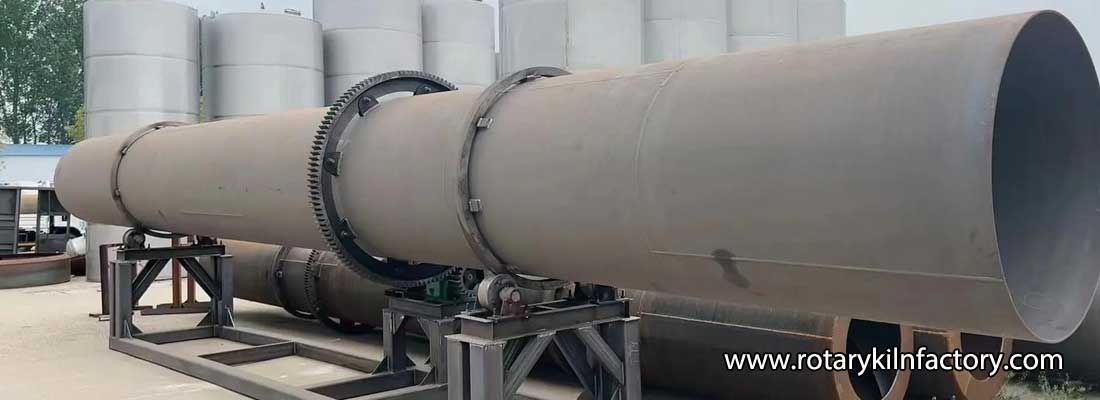
Rotary dryer
Fly ash enters the interior of the dryer through the feeding end, where the heat generated by the combustion of fuel in the hot air furnace enters the main unit under the action of the exhaust fan and comes into contact with the material. The material, under the agitation of the agitating blades inside the drying drum, is uniformly dispersed and comes into full contact with the hot air, accelerating heat and mass transfer, and evaporation of moisture. After drying, the material is discharged from the dryer through the discharge hopper.

Function:
Humidity reduction: Dryers are primarily used to reduce the moisture content of wet materials through heating and ventilation, thereby lowering the material’s humidity.
Quality improvement: By removing moisture from the material, dryers can enhance the quality and stability of the material, reducing the risk of decay and mold.
Extended shelf life: Lowering the moisture content of the material can extend its shelf life, thereby improving its utilization rate and market competitiveness.
Reduced transportation costs: Dried materials are lighter, reducing weight and costs during transportation.
Dust collector
The discharge end of the dryer is connected to a dust collector. The dust collector removes dust and solid particles generated during the drying process to ensure that the discharged gas is clean and dust-free, meeting emission standards for solid pollutants.

Function: The main function of the dust collector is to reduce the entry of solid particles into the dryer and discharge system, reducing equipment wear and blockages, and extending equipment life. Removing impurities such as dust ensures the quality of the dried product, preventing impurities from affecting the appearance, texture, and functionality of the product.
Belt conveyor
The finished materials discharged from the dryer are transported to the dry sand storage box by a net conveyor.
Dry sand storage box
The finished materials after drying are temporarily stored in the dry sand storage box and then uniformly transported by loading vehicles.
The above is the detailed process of sand drying and the equipment required for each stage. We can see that from wet sand to dried sand, each equipment in each stage plays a crucial role. If you are interested in dryers or equipment in drying production lines, feel free to contact us. Our experts will provide you with detailed answers.