
Introduction
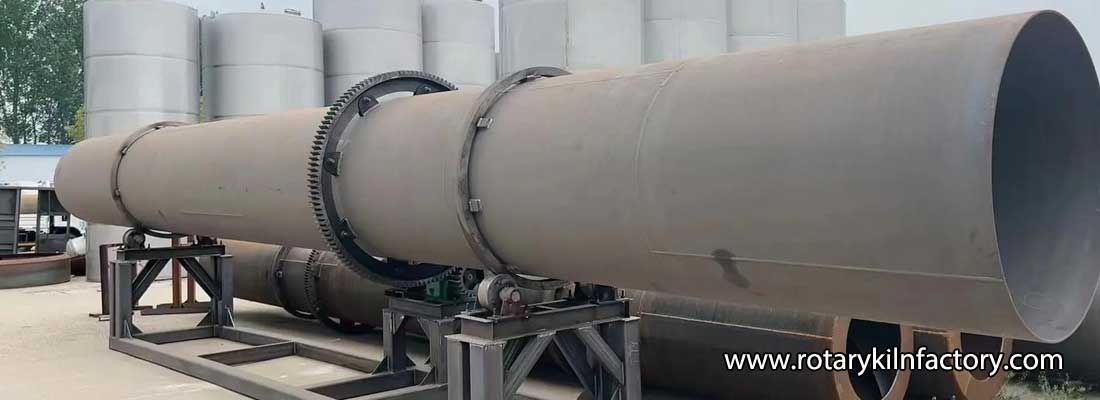
Refractory lining in cement rotary kiln is a lining refractory cylinder surrounded by a sloping steel material can build a cement rotary kiln. Rotary kiln is an important part of the incineration system. That makes lining refractory bricks even more important. You should not only choose appropriate types of refractory bricks but also should pick bricks with high quality. Because various wastes are incinerated in the kiln for harmless and reduced treatment and the complexity of the chemical composition puts higher requirements on the quality of the lining of the rotary kiln.
Different Refractory lining In Different Cement Rotary Kiln Zones

- Refractory lining in cement rotary kiln in decomposition zone
The thermal stress of the lining brick is not so high, because generally the temperature of the flue gas is less than 1350 degrees, and the temperature of the material in kiln is higher than 900 degrees. But a small amount of C2S has heaped up in the decomposition zone. So, the chemical stresses that refractory bricks take is mainly include: a small amount of alkali chloride compound and the solution and the flue gas of the alkali sulfur compound. The solution to reducing chemical erosion is to minimize the amount of alkali, chlorine, and sulfur in the raw materials and fuel, meanwhile to choose high alumina refractory brick that can withstand the temperature of this working condition and withstand alkali corrosion. - Refractory lining in cement rotary kiln in transition Zone
The temperature of the flue gas in the transition zone may exceed 1600 degrees, and the temperature of the kiln material is generally less than 1300 degrees. The chemical attack is alkali sulfur content in the kiln material. The higher the content is, the more serious the chemical corrosion be. In summary, the transition zone is suitable for refractory bricks with a softening temperature exceeding 1600 degrees and is resistant to alkali sulfur and low thermal conductivity. - Refractory lining in cement rotary kiln in solution Firing Zone
The temperature of the flue gas in the solution firing zone is about 1700 degrees, and the temperature of the kiln material is above 1300 degrees. Generally, you should adopt refractory bricks with a high softening temperature and resistant to kiln material solution. Such fire bricks are dense and have a high thermal conductivity. - Refractory lining in cement rotary kiln in firing Zone
This part is located in the high-temperature part of the kiln, the flame temperature can reach 2000 degrees, and the temperature of the kiln material is from 1350 to 1400 degrees. In this zone, the thick kiln skin is formed to protect the refractory brick. The firing zone is protected by the kiln skin. But under the influence of temperature, the solution component in the kiln skin penetrates into the void of the refractory brick and acts on the refractory brick component. The newly obtained compounds have low melting temperature and volume expansion, which easily damage the refractory bricks. The in-band refractory bricks are subjected to lower stress than the refractory bricks at both ends. Generally, regardless of the working conditions, the refractory bricks in the firing zone must have strong stick- kiln- skin characters. - Refractory lining in cement rotary kiln in cooling Zone
The cooling zone’s operating conditions vary greatly. In addition to high-temperature airflow and clinker thermal stress, the lined bricks are more like to resistant to high-temperature dusty airflow and abrasion of the clinker after solidification. The erosion of the melt and the sulfur-base compound melt in the clinker will also damage the lined bricks. There is also the elliptic stress caused by the deformation of the high-temperature cylinder. In a word, the cooling zone refractory bricks should be able to endure thermal stress, thermal chemical attack and thermo-mechanical stress.
How To Extend The Service Life Of Refractory lining in cement rotary kiln

- Refractory lining in cement rotary kiln’s heating and cooling system is a key. The kiln-lined alkaline refractory bricks are the most easy to bricks to crack and peel, and their service life is also the shortest because they have the largest thermal expansion coefficient and poor thermal stability, but they are used in the highest temperature zone in kiln. Also, the gradient of temperature rise and temperature drop is the steepest in there, and the term pressure is the largest.
- Refractory lining in cement rotary kiln’s preheating: For hydraulically castables, it should not be baked within 24 hours in order to solve the problem of adhering water and chemically bound water; For composite linings containing castables, the baking time should be one week.
- Refractory lining in cement rotary kiln’s drying kiln must be continuous and must not be interrupted. During the drying process, the kiln should be turned according to the drying system, and the temperature of the bricks in the belt should be burned evenly to ensure the centerline of the kiln cylinder is regular and the ellipticity is normal.
- Refractory lining in cement rotary kiln must be slow to ensure the safety of the kiln lining when the kiln is stopped but without changing the bricks. After stopping the kiln, the auxiliary drive gap should be used, and the high-temperature fan should be stopped and the valve closed to maintain the minimum negative pressure. Then, the kiln door can be opened to speed up the cooling after 24 hours.
- Refractory lining in cement rotary kiln’s hanging kiln skin and protecting kiln skin: Under the protection of normal kiln skin, the surface temperature of alkaline brick is reduced from 1400 degrees to 600 degrees without kiln skin. The temperature gradient inside the brick is significantly gentle, which significantly inhibits the damage of infiltration and deterioration and extends the service life of alkaline refractory bricks.