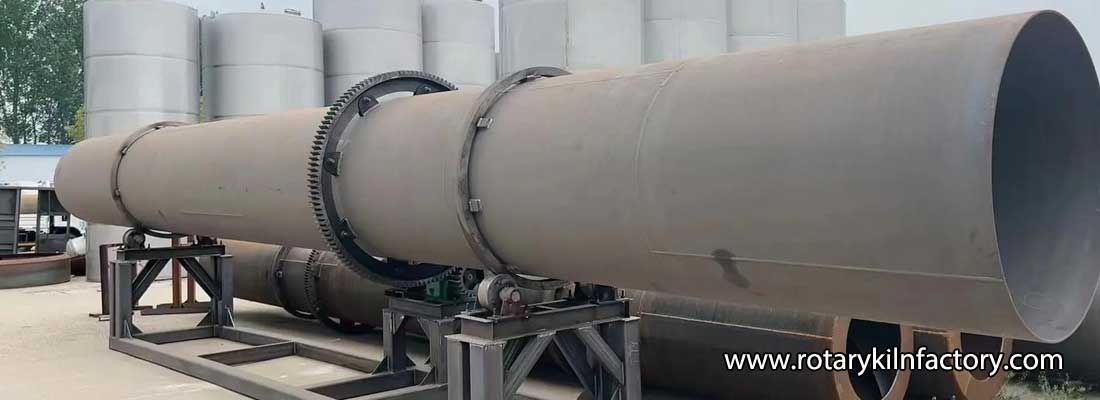

The cylinder of the rotary kiln’s main structure is the kiln shell, rim, and thrust roller. Shell is the main part of the rotary kiln. It is a steel plate with a 40mm thickness, which is near the rim. Because of the high load-bearing, the thickness near here is much thicker. There is a layer of 200mm refractory bricks on the inside of the kiln. When the kiln shell is working, because of high temperature and bearing, the kiln shell can have an oval transformation. It will cause pressure on kiln bricks and influence the lifetime of bricks. A meter long from the kiln tail, there is a taper-shaped cylinder, which makes sure materials from the preheater’s feed space can enter the kiln smoothly.


Rotary Kiln Shell Design History
In history, the time of rotary kiln construction parallels the time of the boiler. The engineers who first invented the rotary kiln have a background in vehicle construction. The rotary kiln’s outside shell is made of a slab and rolling plate whose thickness is between 18-25mm. Rolling plate is always cold-rolled to needed curvature and it is always half-round pieces. Then form a cylinder by connecting the two pieces of them whose length is equal to their diameters. Those components are a piece of steel plant of the same thickness connected by rivets. The cylinder part uses a similar mode by making the end meet the end.


The short pieces are manufactured in the factory, and the last installation is always on the spot. Rivets’ methods lasted until the second world war. Electric arc welding to make thick plate welding joints developed in America, like the shipbuilding industry, welding technology was applied in England slowly. Welding has an outstanding advantage which is a lighter structure with no extra belt. Kiln manufacturer starts using welding after The Second World War, while still using clinch bolts, because of lacking necessary skills in cement factories.
Related Products Recommendation
Rotary Kiln Shell Design Technology
In the cement business, widely using iron cylinder equipment to do chemical, mechanical or physical disposal of solid materials is called a rotary kiln. The rotary kiln’s inner side usually uses special refractory bricks as the protecting layer. Because the installation technology is laid-dry, there are gaps among refractory bricks.
When the rotary kiln is working, an amount of microelements like chlorine, sulfur, and phosphorous in materials and fuel contacts the iron cylinder and causes a chemical to react through the gaps of refractory bricks after high-temperature gasification, which aggravates the rotary kiln cylinder’s corrosion.
Own to the materials and fuel of the cement business are gradually lacking, waste mine waste residue city solid waste garbage gradually become productive materials and alternative fuel, Which under serious situations can bring metal corrosion problems and causes crack and breakage. So, a grown anti-corrosion technology is necessary.
You should choose any selling anti-corrosion materials to apply on the surface of sandblasted and dried iron. The procedure is a surface sandblast, coat preparation, material spraying, and coating inspection and curing.