
Sludge Dryer
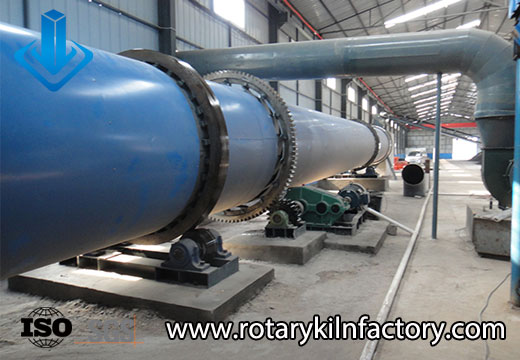
Sludge Dryer Specification
Production capacity: 30-200 t/h
Raw material moisture 53%-85%, output moisture ≤25%
Supported fuels: natural gas, liquefied gas, biogas, biomass, bark, wood blocks and other fuel forms.
Applicable materials: suitable for drying various sludge materials such as activated sludge, sewage sludge, papermaking sludge, printing and dyeing sludge, leather sludge, electroplating sludge, municipal sludge, etc.
Send your thoughts directly
Sludge dryer is a drying equipment designed to solve various sludge treatment problems. With the rapid development of industrialization and urbanization, the output of sludge has increased year by year. How to efficiently treat sludge has become a major challenge in environmental protection. The sludge dryer machine uses advanced drying technology to convert sludge with high moisture content into dry materials with low moisture content, significantly reducing the sludge volume and facilitating subsequent transportation, disposal, or resource utilization.
Sludge dryer system is suitable for treating various types of sludge, including activated sludge, sewage sludge, papermaking sludge, printing and dyeing sludge, leather-making sludge, electroplating sludge, and municipal sludge. Whether it is industrial waste sludge or by-products from urban sewage treatment plants, sludge dryers can handle it efficiently. By reducing the moisture content of sludge, sludge dryers not only achieve sludge reduction but also lay the foundation for harmless treatment and resource utilization. For example, sludge dried by sludge drying equipment can be used to produce organic fertilizer, building materials, or even as fuel, fully embodying the dual value of economy and environmental protection.
Application Scope of Sludge Dryer Machine
Sludge dryers are widely used in the treatment of various types of sludge due to their efficient drying capacity and adaptability. The following are several typical sludge treatment types and industry applications.
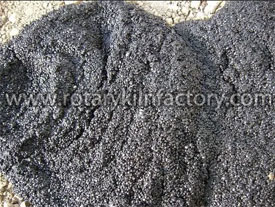

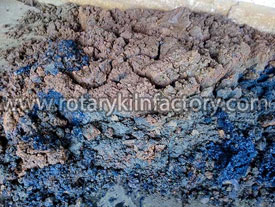
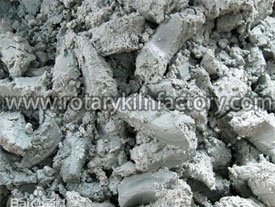
Activated sludge drying
Activated sludge mainly comes from sewage treatment plants. As a by-product produced during biological treatment, it has a high moisture content and is easy to decay. Through the treatment of a sludge dryer machine, the volume of activated sludge is significantly reduced, and the dried material can be further used for composting or fuel preparation.
Sewage sludge drying
The large amount of sewage sludge generated during the municipal sewer desilting process has a complex composition and high water content. The sludge dryer system can efficiently remove the water in it, reduce its transportation and treatment costs, and create conditions for subsequent harmless disposal.
Papermaking sludge drying
The sludge produced by the papermaking industry contains paper fibers and organic matter and has a certain resource potential. Through drying treatment, this type of sludge can be processed into biomass fuel or filler to achieve resource recycling.
Printing and dyeing sludge drying
Dyeing sludge comes from the wastewater treatment process in dyeing and finishing and usually contains a large amount of dyes, auxiliaries, and heavy metals. The sludge dryer machine can quickly reduce the moisture content of the sludge, reduce its harmfulness, and facilitate centralized treatment or incineration.
Tannery sludge drying
Tannery sludge is rich in high concentrations of organic matter and heavy metals, with high moisture content and strong viscosity. The dryer can not only reduce the volume but also facilitate subsequent harmless treatment and reduce environmental risks.
Electroplating sludge drying
The sludge generated by the electroplating industry usually contains metal ions such as nickel and chromium and is considered hazardous waste. After drying, the sludge can be further extracted with valuable metal resources or safely landfilled.
Municipal sludge drying
A large amount of sludge is produced every day in urban sewage treatment, which has high moisture content and is difficult to treat. The sludge dryer can significantly reduce the volume of sludge, reduce the cost of subsequent processing and transportation, and promote resource utilization.
Whether it is industrial sludge or municipal sludge, the sludge drying equipment can provide efficient, economical, and environmentally friendly solutions, laying a solid foundation for achieving sludge reduction, harmlessness, and resource utilization.
Want More Details?
Do you want to know more details about the AGICO sludge dryer? Try clicking the button to leave a message for our engineer now!
Working Principle of Sludge Dryer
The sludge drying system mainly comprises heat source devices, a sludge dryer machine, a conveyor, dust removal equipment, an induced draft fan, a power distribution cabinet, and other accessories. Various equipment cooperates to complete the drying process of various sludge materials.
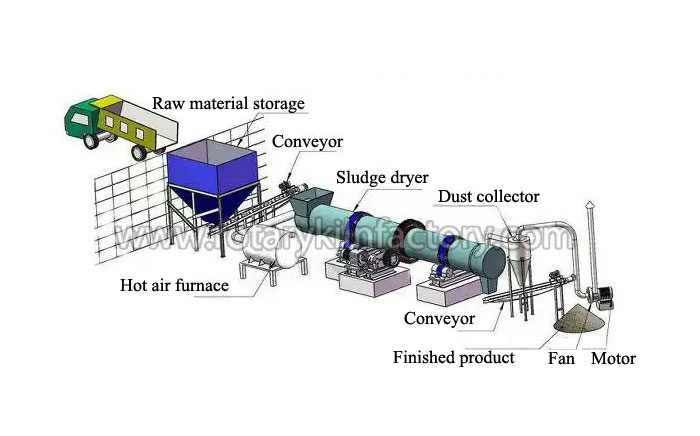
The following is the general working process of sludge drying by sludge dryer:
Sludge feeding
Sludge with high moisture content is evenly fed into the drum through the feeding device. The sludge drying equipment is designed to prevent sludge from sticking or clogging, ensuring smooth feeding.
Drying process inside the drum
The drum is equipped with specially designed lifting plates and guide devices. When the drum rotates, the sludge is evenly turned and continuously lifted to form a “material curtain”. This dynamic contact method greatly increases the contact area between the sludge and the hot air and improves the heat exchange efficiency.
Heat source transfer
The drum sludge dryer’s heat source can come from combustion, hot air furnaces, or other energy devices. The high-temperature hot air contacts the sludge in the drum in countercurrent or concurrent flow and quickly evaporates the water in the sludge. The evaporated water is discharged by the induced draft fan as water vapor to avoid affecting the environment.
Exhaust gas treatment
The exhaust gas generated during the drying process is treated by a dust removal and deodorization system to ensure that it meets environmental emission standards.
Technical Parameters of Sludge Dryer
| Production capacity(t/h) | Raw material moisture(%) | Output moisture(%) | Total installed power | Area(m2) |
|---|---|---|---|---|
| 30 | 53-85 | ≤25% | 40 | 20×5 |
| 50 | 53-85 | ≤25% | 58 | 20×5 |
| 60 | 53-85 | ≤25% | 65 | 22×6 |
| 80 | 53-85 | ≤25% | 86 | 22×6 |
| 100 | 53-85 | ≤25% | 126 | 25×8 |
| 120 | 53-85 | ≤25% | 157 | 25×8 |
| 150 | 53-85 | ≤25% | 188 | 28×8 |
| 180 | 53-85 | ≤25% | 217 | 30×10 |
| 200 | 53-85 | ≤25% | 236 | 30×10 |
Product Features of Sludge Dryer
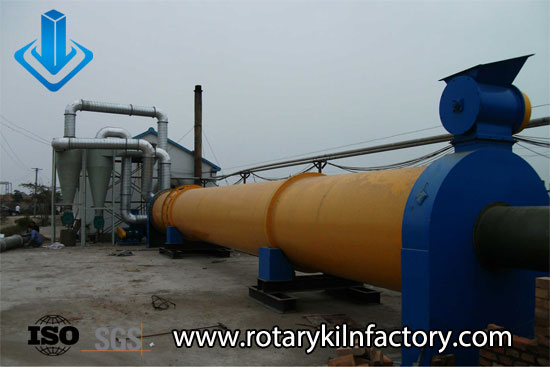
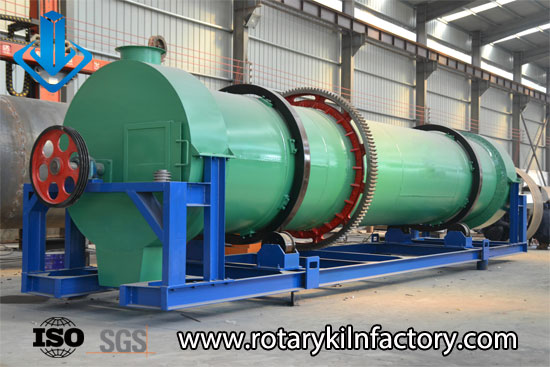
Efficient drying
The drum sludge dryer machine uses advanced heat transfer technology and optimized drum structure design to greatly increase the contact area between sludge and heat source, quickly evaporate water, and achieve efficient drying effects. No matter how high the moisture content of the sludge is, it can significantly reduce its moisture content in a short time to meet different treatment needs.
Versatility
The sludge dryer has a wide range of applicability and can handle a variety of sludge types, including activated sludge, sewage sludge, papermaking sludge, electroplating sludge, etc. Whether in an industrial field or a municipal sludge treatment scenario, the sludge dryer can operate stably and adapt to complex production environments.
Environmentally friendly design
While focusing on drying efficiency, the sludge dryer system incorporates the concept of energy conservation and environmental protection and adopts an optimized heat energy utilization system to reduce energy consumption. The tail gas treatment device ensures that emissions meet standards, avoids secondary pollution to the surrounding environment, and helps achieve sustainable development goals.
Solid structure
The dryer is made of high-strength corrosion-resistant materials and is scientifically optimized to ensure long-term stable operation of the equipment in high temperature and high humidity environments. The core components are durable and easy to maintain, reducing the long-term operating costs of users.