
Frac Sand Dryer

Frac Sand Dryer Specification
Production capacity: 2.6-115 t/d
Output moisture ≤0.5%
Supported fuels: coal, fuel oil, natural gas, liquefied gas, electricity, steam, etc.
Applicable materials: suitable for drying frac sand, machine-made sand, silica sand, yellow sand, and other materials.
Send your thoughts directly
Frac sand is a high-strength quartz sand specially used for hydraulic fracturing in the oil and gas industry. Its main function is to act as a proppant, keeping the cracks open during the hydraulic fracturing process, thereby improving the efficiency of oil and gas flow.
During mining and washing processes, frac sand absorbs a significant amount of moisture. Excessive moisture content can lead to clumping, making storage difficult and even preventing uniform injection into fractures, which severely impacts subsequent operations. Water in the micropores of frac sand will also weaken the mechanical strength of the particles, resulting in a decrease in the strength of the sand. Water will also cause fine powder and impurities to adhere to the surface of sand particles, affecting the purity and efficiency of frac sand. Therefore, frac sand drying is a very necessary step in the frac sand processing process.
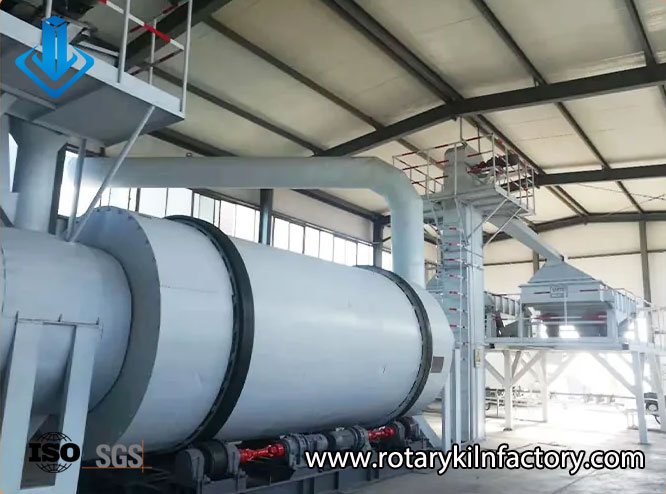
By frac sand drying, we can obtain products with good fluidity, uniform particle size, high-pressure resistance, impact resistance, and easy storage and transportation, thus meeting hydraulic fracturing requirements in the oil and gas industry. Frac sand drying generally uses a frac sand dryer. The frac sand dryer adopts a triple-pass drum dryer in terms of structure. This type of dryer is highly efficient in heat utilization, requires a small footprint, and ensures excellent drying uniformity. It is ideally suited to meet the strict requirements for low moisture content and high quality in frac sand used for oil and gas extraction.
Frac Sand Dryer for Sale
Working principle of frac sand dryer
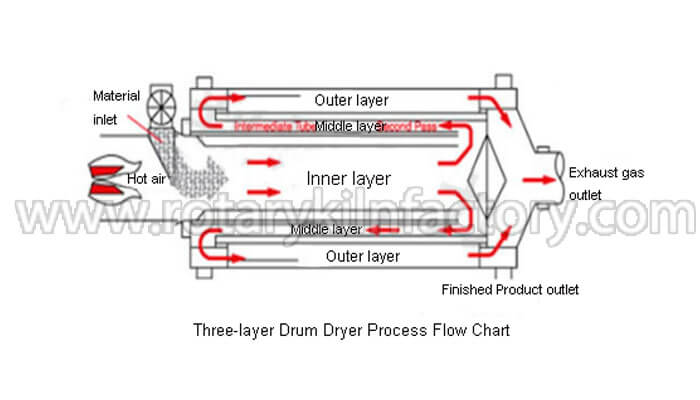
The material enters the inner layer of the rotary drum from the feeding device to achieve downstream drying. The material is continuously picked up and scattered in a spiral motion under the inner layer of the lifting plate to achieve heat exchange. The material moves to the other end of the inner layer and enters the middle layer for countercurrent drying. The material is repeatedly sprinkled forward in the middle layer and generally moves forward two steps forward and one step back. The material in the middle layer fully absorbs the heat emitted by the inner drum and the heat of the middle drum, while extending the drying time. The material reaches the best drying state at this time. Finally, it is sent out of the drum through the discharge port.
Technical parameters of frac sand dryer
| Model | Volume of the drum(m3) | Drum speed(r/min) | Motor power(kw) | Maximum inlet temperature(℃) | Weight(t) | Capacity(t/h) |
|---|---|---|---|---|---|---|
| Φ1.5×3 | 5.3 | 8-10 | 3×2 | 700-750 | 6.0 | 4.5-7.5 |
| Φ2.0×4 | 12.6 | 8-10 | 5.5×2 | 700-750 | 7.4 | 10.6-17.8 |
| Φ2.5×5 | 24.5 | 8-10 | 7.5×2 | 700-750 | 15.3 | 20.6-34.7 |
| Φ2.8×6 | 36.9 | 8-10 | 7.5×4 | 700-750 | 32 | 31.1-52.2 |
| Φ3.2×8 | 64.3 | 8-10 | 15×4 | 700-750 | 43 | 54.1-91 |
| Φ3.6×10 | 81.4 | 8-10 | 22×4 | 700-750 | 48 | 68.5-115 |
Flexible Design of Frac Sand Dryer Meets Diverse Needs
The multi-fuel adaptability design and multi-material handling capabilities of the frac sand dryer make it the preferred equipment for sand material drying needs. Whether in oil fields, building materials production plants, or industrial processing workshops, the frac sand dryer can complete the drying task with its high efficiency and low energy consumption, providing customers with reliable solutions.
Frac sand dryer supports a variety of fuel forms
The fracturing sand dryer is designed to be flexible and supports a variety of fuel forms to meet the needs of different regions and users. Available fuel forms include coal, fuel oil, natural gas, liquefied gas, electricity, steam, etc. Customers can choose the appropriate fuel form according to the fuel cost in their area.
Frac sand dryer can handle a variety of materials

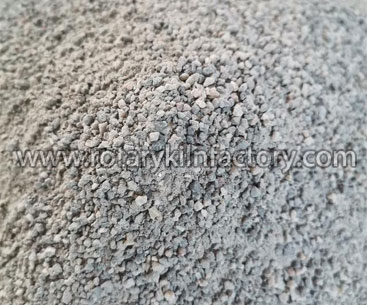
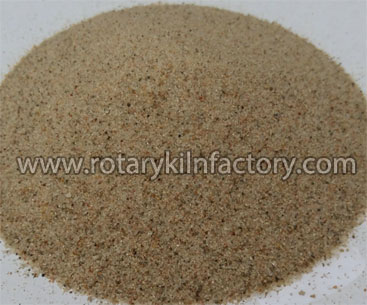
In addition to being designed specifically for frac sand drying, the frac sand dryer can also be widely used for drying a variety of sand materials. Frac sand, machine-made sand, silica sand, yellow sand, and other materials can all be used.
Customizable options for frac sand dryer
In addition to existing specifications, frac sand dryer can also provide customers with additional equipment customization services. These customized options include wear-resistant linings, high-efficiency burners, precision screening devices, etc. to meet the needs of drying different types of materials.
AGICO Frac Sand Dryer Success Cases
Middle East natural gas extraction support service provider frac sand dryer project
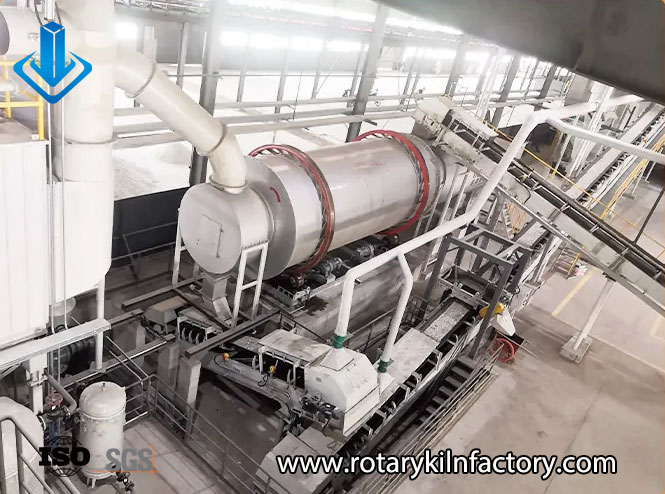
Project background
The Middle East customer is located in a desert area with a dry climate, but the excavated fracturing sand contains a lot of impurities and needs to be cleaned and dried to meet the quality requirements of fracturing sand. The project requirements are as follows:
1. Stable equipment operation in the high-temperature desert environment.
2. Ensure that the moisture content of the finished sand is controlled below 0.5%.
Solution
| Model | Volume of the drum(m3) | Drum speed(r/min) | Motor power(kw) | Maximum inlet temperature(℃) | Weight(t) | Capacity(t/h) |
|---|---|---|---|---|---|---|
| Φ2.0×4 | 12.6 | 8-10 | 5.5×2 | 700-750 | 7.4 | 10.6-17.8 |
Φ2.0×4 three-drum fracturing sand dryer, the dryer cylinder is made of high wear-resistant alloy material to improve the durability of the equipment.
Equipped with a dewatering screen to reduce the initial moisture content of the sand before entering the dryer.
A fluidized bed cooler quickly reduces the discharge temperature for easy storage and transportation.
Implementation effect
The equipment maintained stable operation in an extremely high-temperature environment and operated without failure for more than 12 months.
The quality of the finished product met the oil industry standards, and the water content was controlled at 0.3%.
The unit energy consumption cost was 10% lower than the industry average.
Australian mining company frac sand dryer project
Project background
The client is a large mining company in Australia, focusing on providing high-quality fracturing sand for oil and gas mining projects in the Asia-Pacific region. With the rapid growth of market demand, they plan to upgrade the existing production line, focusing on solving the following problems:
Increase fracturing sand production capacity to meet order demand.
Improve sand drying uniformity to ensure product quality.
Reduce energy consumption, respond to environmental protection requirements, and control costs.
Solution
| Model | Volume of the drum(m3) | Drum speed(r/min) | Motor power(kw) | Maximum inlet temperature(℃) | Weight(t) | Capacity(t/h) |
|---|---|---|---|---|---|---|
| Φ2.8×6 | 36.9 | 8-10 | 7.5×4 | 700-750 | 32 | 31.1-52.2 |
Φ2.8×6 three-drum frac sand dryer has a drying efficiency that is 35% higher than that of traditional single-drum equipment, and the drying is more uniform, with the moisture content of the finished product stable at 0.2%-0.4%.
Pulse bag dust collectors and cyclone separators are used to ensure that the dust emission meets the local environmental protection standards in Australia while protecting the working environment.
Equipped with an automated control system, it monitors the operating status of the equipment in real-time, including temperature, humidity, and discharge speed, reduces the need for manual operation, and improves production efficiency.
Implementation effect
Production efficiency improvement: The average daily production capacity has been increased from 300 tons to 450 tons, fully meeting customer order requirements.
Energy consumption optimization: Thanks to the three-drum structure design and heat recovery system of the fracturing sand dryer, the equipment operating cost has been reduced by 20%.
Environmental protection compliance: Dust emissions have been reduced to below 30mg/Nm³, successfully passing the review of the local environmental protection department.
Product quality improvement: The uniformity of sand and gravel drying has been significantly improved, and the compressive strength and wear resistance of the finished sand have reached higher standards, which is well received by downstream industry customers.